Why Superfly exists: coach-built training for amateur racers
Superfly is a coach-handcrafted training programme with AI companion on top for amateur racers with limited time and no budget for a personal coach.

Amateur racers need a coach, but most can’t pay for one. A personal cycling coach for amateur racers costs $100–300 a month. Hard to justify for a hobby. Plan templates are cheaper, but they don’t adapt to a life with a job and a family. Superfly was built for the gap in between.
The typical amateur racer: 5–10 trainable hours a week, a real season ahead, a power meter. And a 30-minute window between the school run and dinner.
The amateur racer’s dilemma
There are three common options. Each fails a time-crunched racer in its own way.
| Option | What works | Where it fails |
|---|---|---|
| Plan templates | Structure, low price | Don’t adapt. Miss a session and the plan just moves on. |
| Self-coached | Free, flexible | No structure. Most rides end up medium-hard. |
| Personal coach | Real attention | $100–300 a month, scheduled check-ins, your data is a side input. |
Templates and self-coaching often end in the same place: the mid-zone. Every ride a bit hard, no ride really easy. Stöggl and Sperlich’s 2014 polarized training study found that a polarized 80/20 split improved well-trained athletes more than threshold-heavy training.
What Superfly is
A training programme written by a coach, run by software, with an AI companion for questions.
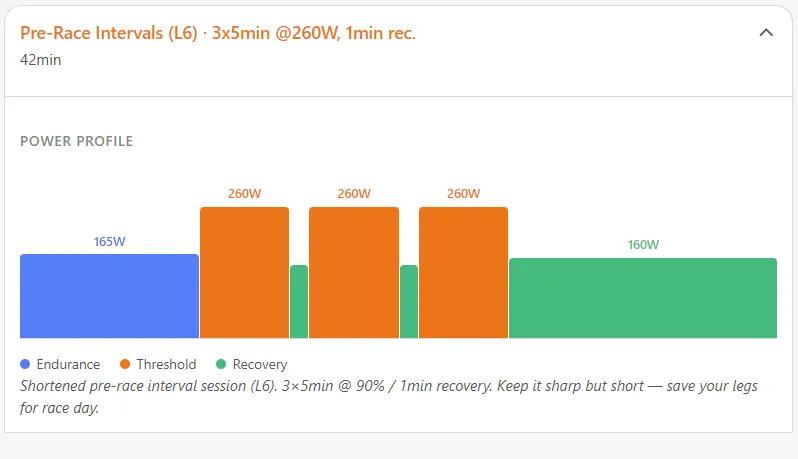
- The programme. Every workout template is written by hand: warm-ups, intervals, recovery rides, tests. It is based on the Norwegian model. Most volume below the first lactate threshold, focused work near the second, no mid-zone grinding.
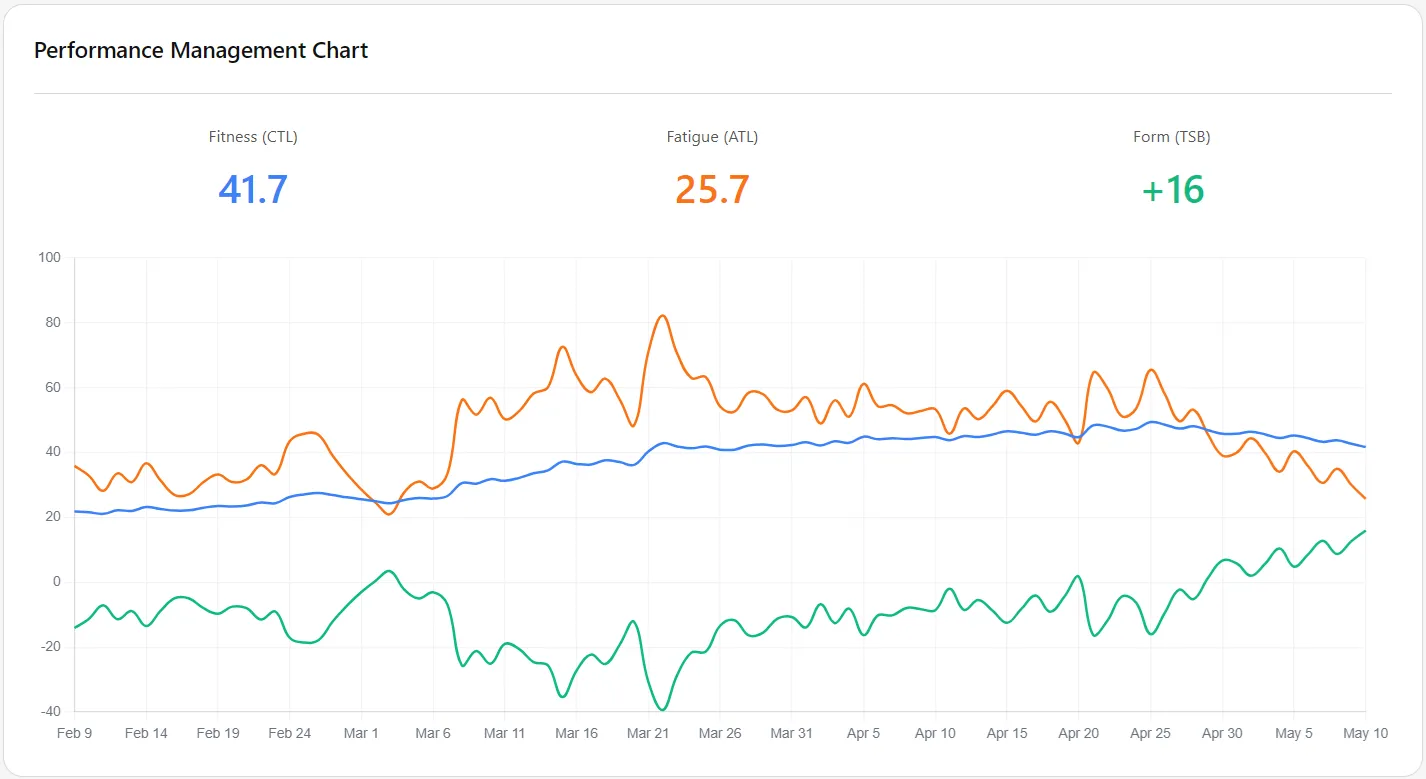
- The software. Rides import from Strava and match to planned sessions. Miss a day or ride shorter and the plan adjusts. CTL, ATL and TSB are tracked across years.
- The companion. Answers questions about your plan, at any hour.
None of this is new as a concept. What is new: an amateur gets it without a coach managing the calendar.
Small steps, every week
Good coaches are conservative. They don’t raise load 25% because the legs felt fresh on Wednesday. They add a few minutes at threshold, a bit longer endurance ride, a recovery week before fitness goes flat.
Superfly works the same way. There is no phase calendar planned months ahead. Every day is decided from what you actually did, with a rolling three-week limit on hard days. Intervals level up in small steps, only when you handle the current level. Small gains, stacked over years.
The companion, narrow on purpose
The plan is the coach’s work. The companion helps you follow it. It answers questions like:
- why is today’s Z2 ride 90 minutes and not 60
- what does a high heart rate in the warm-up mean
- should I push or back off with sore legs
It does not generate plans, write workouts or predict your fitness. This is on purpose. The methodology is a person’s work. The companion makes it available at 5:30 AM on a Wednesday.
Who this is for
Superfly is for you if you have:
- a power meter
- 5 or more trainable hours a week
- a real season on the calendar
- interest in why a session looks the way it does
If you want a generator that promises big FTP gains in six weeks, this is not it.
FAQ
How does Superfly compare to a personal cycling coach?
A personal coach gives attention and accountability that software can’t fully replace. Superfly gives you a coach-written programme, automatic adaptation to your real rides and a companion for questions. For a fraction of the monthly price.
Do I need a power meter to use Superfly?
Yes. Every interval has a power target, like 245 W for eight minutes, not “moderate effort”. Heart rate alone is not precise enough, especially around the second lactate threshold.
How is this different from TrainerRoad or TrainingPeaks plan templates?
Templates are static. They don’t adjust when you miss a session, ride harder than planned or start a week tired. Superfly adapts as your rides import from Strava, and training runs year-round instead of ending after one race.
How many hours a week do I need for Superfly?
5 hours is the minimum. With fewer hours the polarized split gets compressed. With more hours the plan adds easy volume, not more intensity. Consistency matters most: 9 hours every week beats 14 one week and 4 the next.
Will Superfly work for someone new to structured training?
Yes. You need an honest baseline test first, and it is not fun the first time. After that the programme starts conservative, so structure comes in without breaking you in the first month.