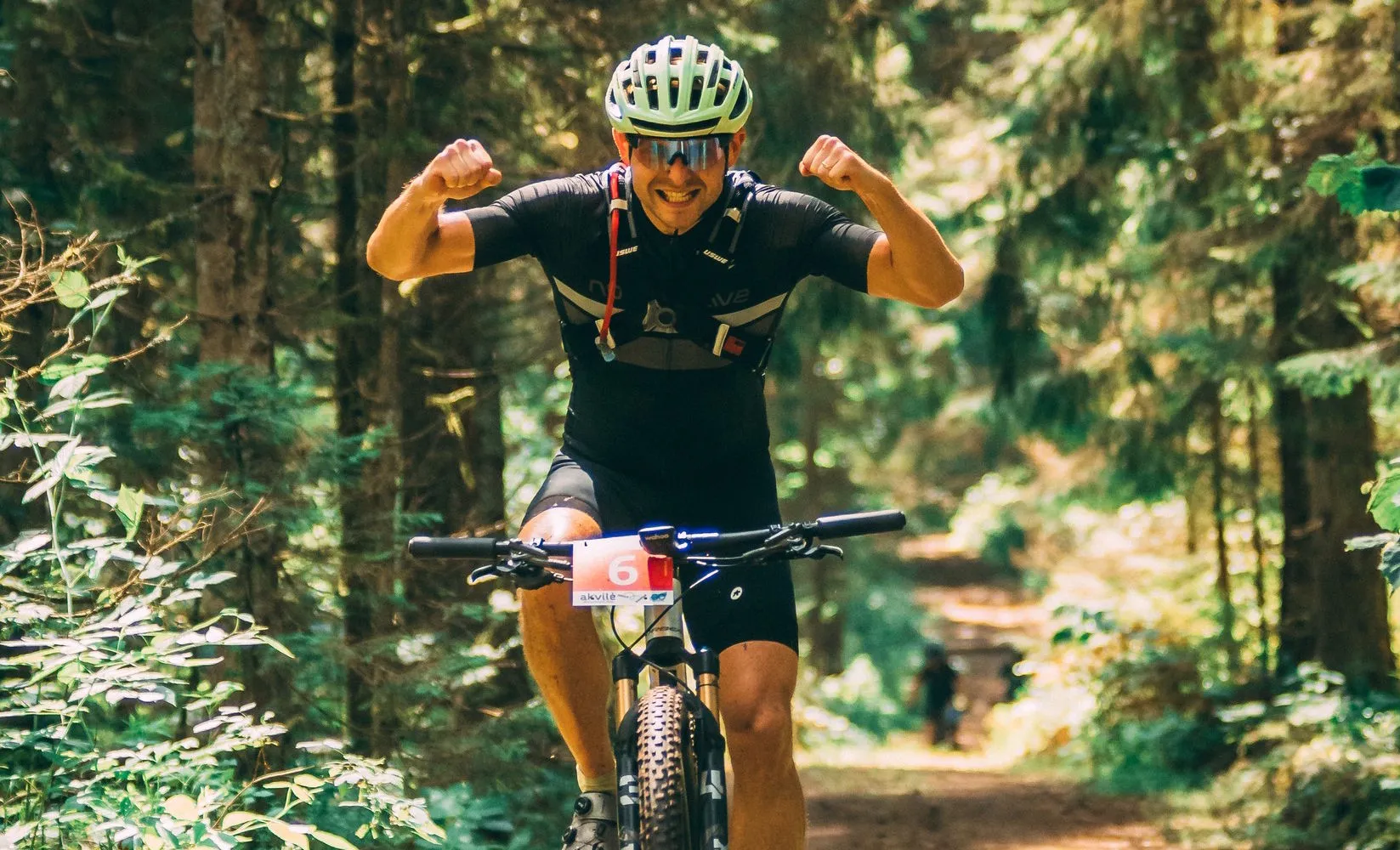
Late to cycling: an amateur MTB racer's path to Superfly
Amateur MTB racer, father of three, founder. From random intervals to structured blocks to building Superfly to scratch my own itch.

I’m Vidas. Amateur MTB racer who is also a father of three, a business owner and co-founder of Superfly. Goal of this post is to give some insight on who’s behind the scenes of Superfly app.
A late discovery
I came to cycling late. 35 years old, after most of my adult life spent building a business, raising kids and sitting too much on the chair. I started after the pandemic and enjoyed every bit of riding nature trails. But eventually I got this idea to test myself in racing as I am quite a competitive person.
The first race
The first XC type race was brutal, from having ambitions to finish somewhere around the middle of my age group to grim reality of hoping to finish at all. I bonked, I hiked my bike, I thought I will throw up on every steeper climb. But I survived and it gave me a huge kick in the ass - I must get faster. Silly outcome, but what should I have expected without any training?
Random intervals
To get faster one year was spent just riding and trying to hit those trails as hard as possible. I did progress, felt stronger, got faster on my personal records, but that was not cutting it. I was in the 75% of finishers instead of my initial 50% target. Then next year I read about interval training, a huge kudos for Tom at High North Performance for the amazing content. So I started doing some 4x4 minute all out efforts. Sometimes once, sometimes twice a week. Without a power meter.
Of course aerobic capacity went up. Anything goes up when you start from a low base. The problem came later: every session was medium-hard. Easy days were not easy enough to recover. Hard days were not hard enough to adapt. Stöggl and Sperlich’s polarized training research shows why this mix works worse than a polarized one.
But such training was very hard to keep up as I felt exhausted most of the time. Even though I was getting closer to my 50% target, I figured that I do a lot but gain small.
Structured blocks
I finally got a power meter. Then the next step was a plan-template subscription. Eight-week base, build, taper, race. The structure helped. Somebody else picked the sessions and placed the recovery weeks.
But the plan did not know my life:
- one of the kids was up at 4 AM coughing
- a client meeting moved my only indoor session
- my last test already changed this week’s intensities
The plan just marched forward. I followed it, more and more out of sync with what I should do that day. It felt frustrating again.
AI-assisted plans
Next step was obvious for someone who builds software: let AI write the plan. I connected a large language model to my Strava history and let it produce weekly plans. It was promising. It could read a week of activities and adjust next week’s load.
But it kept hallucinating physiology:
- it silently turned a polarized week into a threshold-heavy one
- it ignored a test result I had just submitted
- it put a recovery week one cycle early, then a build block right after, when the metrics said the opposite
The answers looked right, but they were not reliable. I don’t want my training from a system that needs a coach watching it.
Scratching my own itch
What I wanted by then was specific. A real adaptive and well tested training. I was lucky to meet Andrejus who is in my eyes a semi-pro athlete with deep understanding for training. Andrejus proposed a method grounded in lactate thresholds and the Norwegian endurance model. Method which is executed by software that adapts when life moves things around. We also wanted to have a software that is accompanied by something that can answer questions 5:30 AM in the morning or late in the weekend - an AI companion. But the methodology and training part remain human crafted.
So Andrejus and I started building it. That is Superfly. The methodology is written by hand by a coach who races. The software does scheduling, Strava matching, CTL/ATL/TSB over seasons and the small daily adjustments. The AI companion answers questions inside a plan, it never generates one. More about this split in why Superfly exists.
My key take aways
- Structure and consistency is of extreme importance where a lot of amateur athletes fail.
- Easy rides are the hardest to do. I had to learn how to ride easy, as I was used to attacking trails all out every time.
- Tracking own progress over years helps to see the big picture. I wrote about it in my race spreadsheet and my power zones.
Why I write here
Training is half method, half judgement. Judgement gets lost if nobody writes it down. Field notes is where I write it down: why a recovery week sits where it does, why a session has its duration, why we avoid the mid-zone.
I am also the first user. The templates were designed for an athlete like me. If something here is wrong, that is on me first.
FAQ
Did starting cycling at 35 hurt the long-term ceiling?
Less than people think. Aerobic adaptations respond to training at any adult age. A late starter misses years of base volume, so the first 3–5 seasons improve faster than later ones.
Why didn’t AI-generated training plans work for you?
The plans looked right, but the physiology underneath was not reliable. The model rearranged polarized weeks, ignored test updates and placed recovery weeks against the metrics. A plan that needs a coach watching it is not automation.
How do you train as an amateur racer with three kids and a business?
At the edges of the day. A 10 PM trainer session, a 6:30 AM ride before the school run, a short Saturday because the kids have tournaments. The plan has to expect that the calendar will move.
What does an amateur MTB racer’s winter training week look like?
Roughly: Z2 sessions and a bit of body work. But it’s boring indoors so I try to extend my season to the very limits.
Is Superfly only for mountain bikers?
No. It supports road, gravel, mountain bike, cyclocross and track. The method is the same for all, the workouts adjust to your event.