Cycling training, built around lactate thresholds.

Hard days hard, easy days easy. Built for amateur racers — most of your training stays below threshold, and intervals progress in small steps, not heroics. Written by an experienced coach who races.

Start training

* Power meter required

Superfly Dashboard - Structured Cycling Training

The method

Training grounded in the Norwegian approach to endurance: low-intensity volume below the first lactate threshold, prescribed efforts at or near the second, and a deliberate avoidance of the mid-zone grinding that fills most self-directed training.

Lactate-threshold structure

Easy rides stay genuinely easy. Hard sessions are precise, not arbitrary. Workouts target the two intensity domains where physiological adaptation actually happens, leaving the rest of the time available for accumulating low-intensity volume.

Power prescribed, not estimated

Every interval has a power target derived from your testing data. Sessions ask for 245 W for eight minutes, not "moderate effort." When the testing changes, the targets change.

Continuous periodization

Training runs year-round through repeating cycles of base, build, peak, recovery, and transition. The plan does not end after one race. Each cycle compounds on the last, which is how aerobic fitness develops over years rather than weeks.

Written by a coach

The training templates are written by an experienced coach who also races. The software handles scheduling, tracking, and adaptation; the underlying programme is the work of a person, not a generator.

Built for amateurs

Superfly assumes a job, a family, and limited hours — not a pro's calendar. Almost all of your riding sits below threshold, where an amateur body actually recovers and adapts, and intensity is reserved for a few controlled sessions a week.

Most of your week is Z2

The bulk of training time sits in Z2, below the first lactate threshold — easy enough to repeat day after day with a normal life around it. There are no hardcore interval sessions: threshold work stays submaximal and controlled, and you finish it knowing you had another rep in you.

Intervals level up like a game

Each interval type has a level. Complete the current dose consistently and the next level unlocks — a little more time just below threshold, a little less recovery between efforts. Small increments the body can absorb, applied continuously, instead of occasional breakthrough sessions it can't.

What you get

The moving parts of the training, day to day.

Power-targeted workouts

Each session has a defined structure: warm-up, intervals, recovery, cool-down. Power targets are derived from your testing data. Intensity is prescribed, not suggested.

Strava sync

Rides import automatically. Completed activities are matched to planned sessions, so the training record reflects what you actually did without manual logging.

Multi-season performance metrics

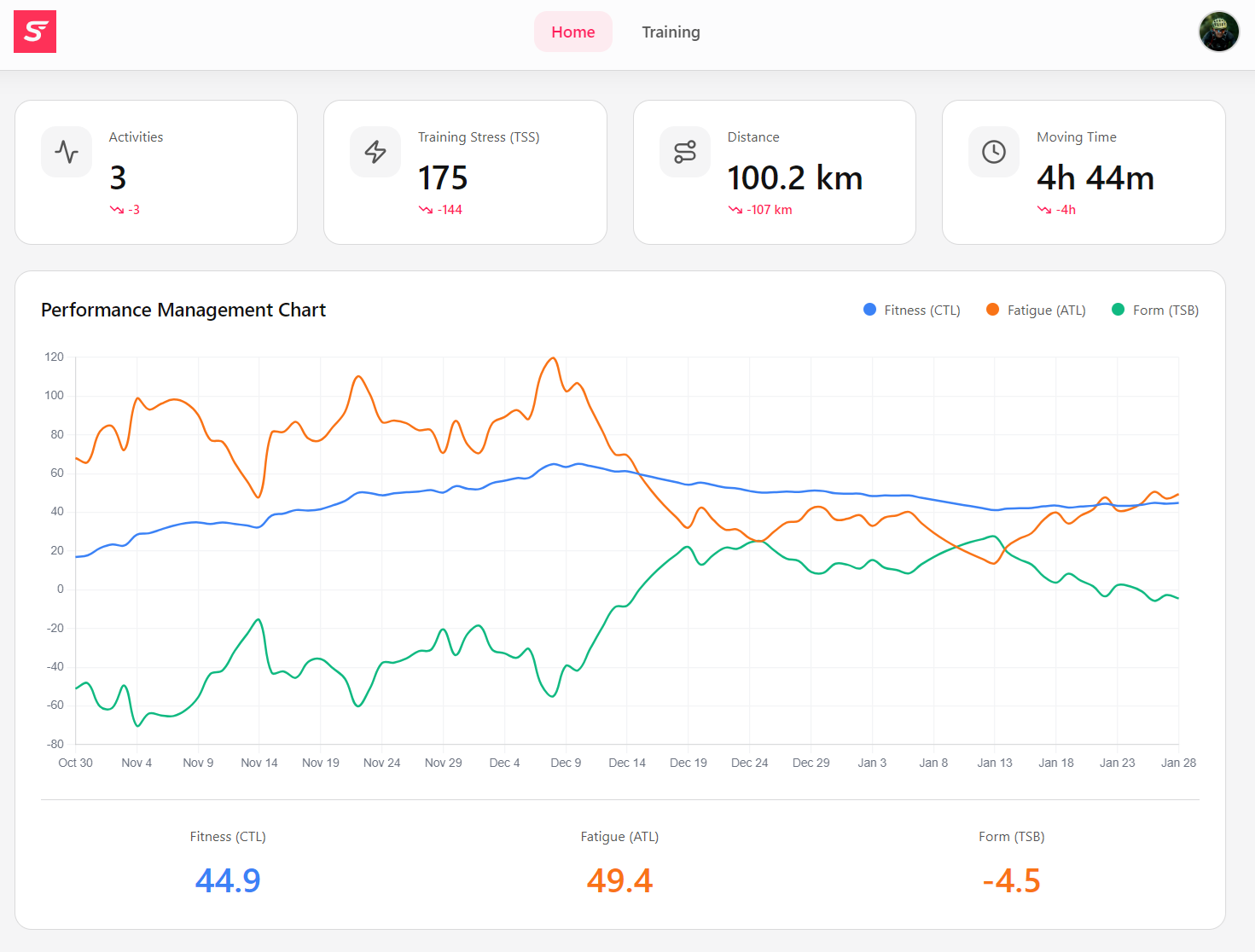
CTL, ATL, and TSB tracked across years, not single training blocks. Fitness, fatigue, and form become visible over the timescales on which they actually develop.

The companion

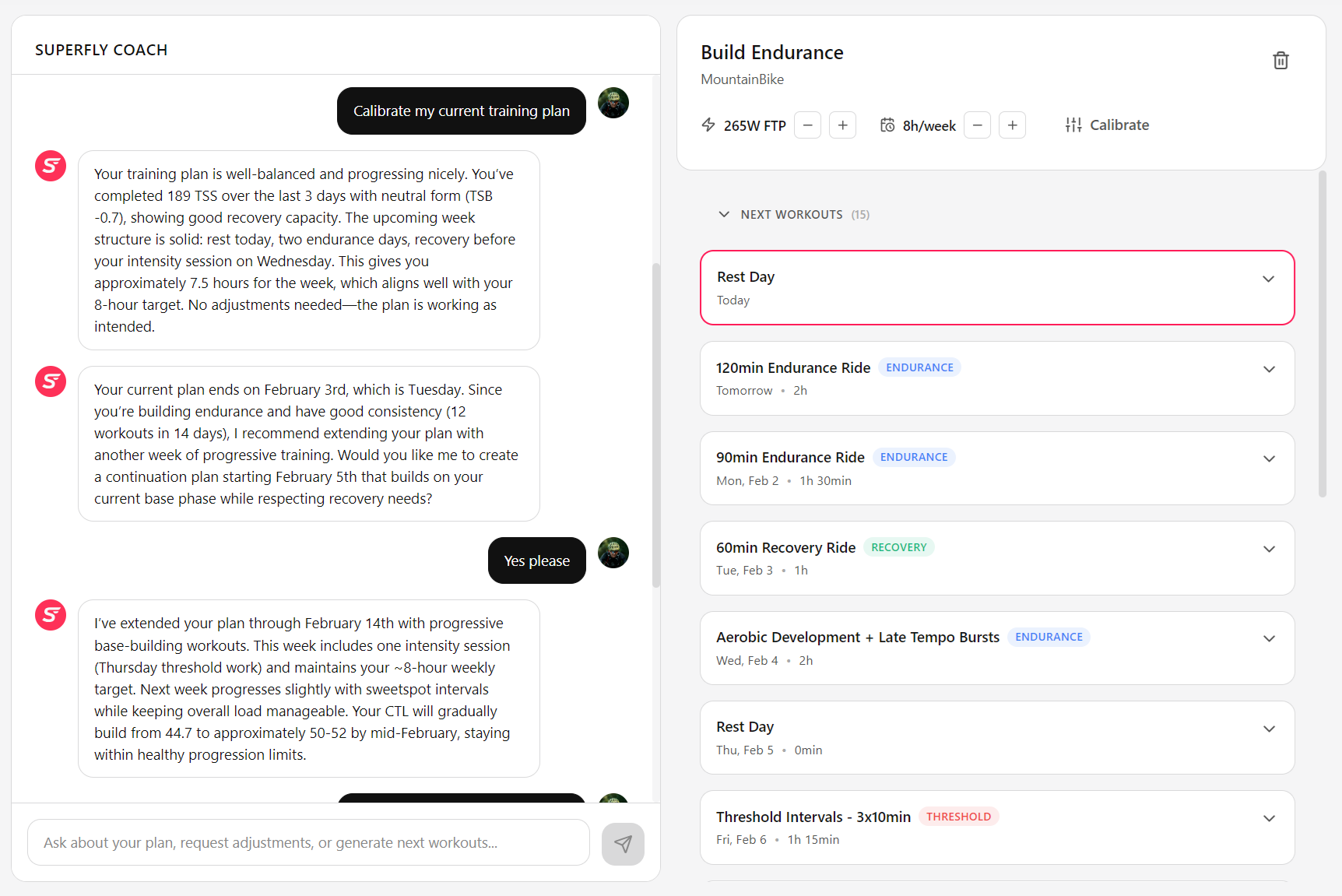
The plan is the coach's work. The companion helps you follow it. It answers questions about today's session, explains why a recovery week sits before a build block, and helps you decide whether the soreness in your legs warrants pushing or backing off. It does not generate plans, predict your future fitness, or write workouts. It works inside an existing programme and helps you understand what you're being asked to do.

Superfly Training Companion Chat

Tested in real races

Superfly's first athlete is the founder. The methodology gets validated the only way that counts — on a start line, in the amateur group, season after season.

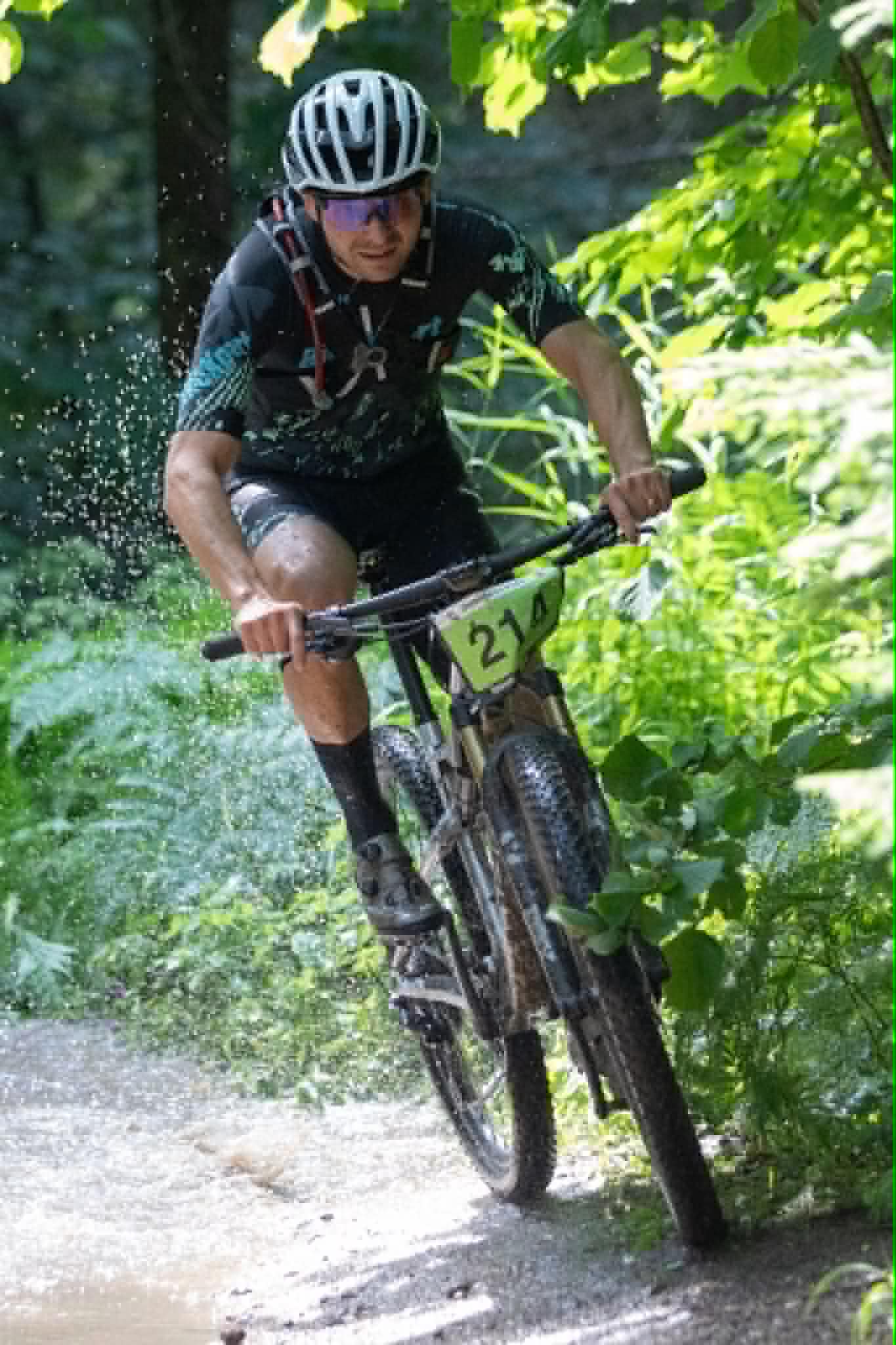
Vidas, Superfly's founder, racing cross-country mountain bike in the amateur group

Two spring race blocks of the Karma Cup, one winter of structured training in between. Same races, same amateur group — different rows in the spreadsheet.

46% 35% average finish, % of field
15% 11% average gap to the winner
Read the race-by-race breakdown

Get started

1

Connect Strava

Activity history and power data import automatically.

2

Configure your training

Discipline, target events, current testing data.

3

Ride

The plan adapts as you go.

Start training

Power meter required.